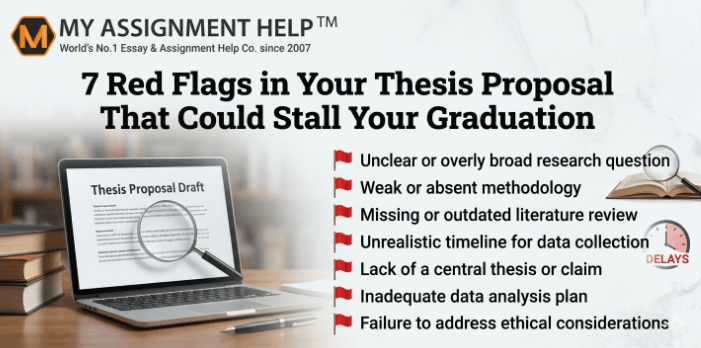
The transition from a graduate student to a doctoral or master’s candidate hinges entirely on one document: the thesis proposal. While many view it as a mere administrative hurdle, the proposal is actually a high-stakes blueprint. According to data from the Council of Graduate Schools, nearly 50% of doctoral students in the U.S. fail to complete their degrees, with the “All But Dissertation” (ABD) phenomenon often rooted in early-stage structural failures.
A flawed proposal does more than just invite a “revise and resubmit” notice; it can lead to years of academic stagnation, financial drain, and burnout. Identifying “red flags” early is the only way to ensure your research remains viable and your graduation timeline stays intact.
1. The “Kitchen Sink” Syndrome: Overly Broad Scope
The most common reason for proposal rejection is a lack of focus. Students often feel the need to solve a global crisis within a single paper. If your research question attempts to cover “The Impact of Technology on Global Education,” you have already stalled.
A successful proposal must be surgical. A broad scope makes it impossible to conduct a thorough literature review or collect sufficient data within a semester. To avoid this, apply the FINER criteria (Feasible, Interesting, Novel, Ethical, Relevant). If your scope isn’t narrow enough to be manageable, your committee will likely flag it as “unrealistic,” immediately delaying your progress.
2. Methodological Mismatch
A significant red flag occurs when your research design does not actually answer your research question. For instance, using purely qualitative interviews to determine the statistical correlation between two variables is a fundamental error in logic.
Many students struggle with the nuances of methodology, leading to a “Methodological Gap” that can take months to rectify. This is often where a professional thesis writing service becomes an invaluable resource, helping candidates align their theoretical frameworks with appropriate data collection tools. Ensuring that your methodology is robust and peer-validated is the cornerstone of E-E-A-T (Experience, Expertise, Authoritativeness, and Trustworthiness) in academic writing.
3. The Missing “So What?”: Weak Significance
Your committee isn’t just looking for a topic; they are looking for a contribution to the field. A proposal that merely summarizes existing knowledge without identifying a “gap” is a major red flag.
In the U.S. academic system, emphasis is placed on “originality.” If your proposal fails to explain how your work will advance theory or practice, it lacks the “Authoritativeness” required for approval. You must explicitly state the problem, the gap in current literature, and the specific value your findings will provide to stakeholders.
4. Untenable Data Access
You may have a brilliant research design, but if you cannot access the data, your graduation is stalled indefinitely. Proposing a study on “The Internal Decision-Making of Fortune 500 CEOs” without having prior, documented access to those individuals is a recipe for disaster.
Committees look for “Feasibility.” If your data collection relies on “cold-calling” high-level officials or accessing classified documents, your proposal will be flagged. Always provide a “Data Access Plan” that proves you can realistically gather the information required within your timeframe. For students managing complex workloads across different subjects, seeking help with assignment tasks can free up the necessary time to secure these high-stakes data permissions and ethical approvals.
5. Outdated or Thin Literature Review
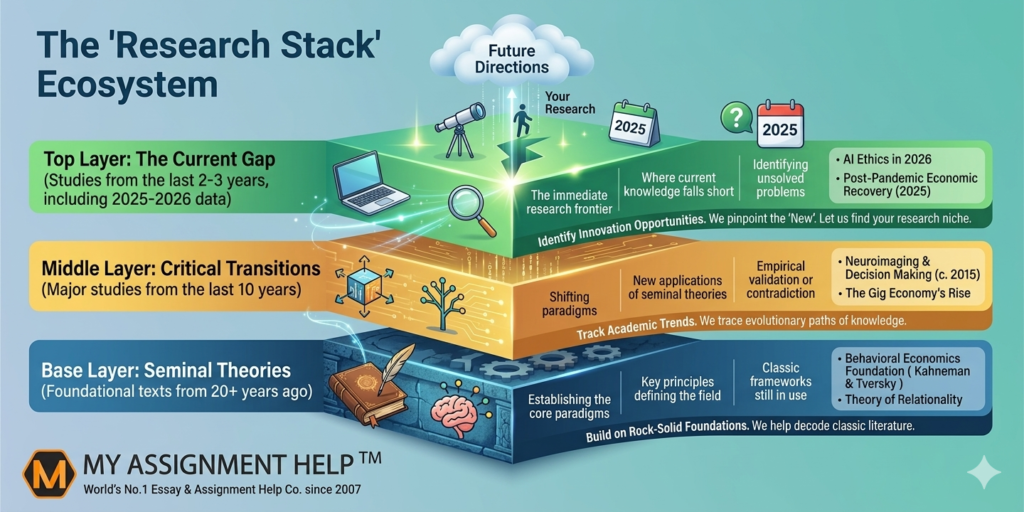
A literature review isn’t just a list of books you’ve read; it’s a map of the conversation you are joining. If your references are mostly older than five to ten years (unless they are foundational “seminal” texts), it suggests your research is irrelevant to current academic discourse.
6. Poorly Defined Theoretical Framework
A thesis without a theoretical framework is like a house without a foundation. You need a “lens” through which to interpret your data. Whether it’s Critical Race Theory, The Great Man Theory, or the Technology Acceptance Model (TAM), this framework must be explicitly defined. If your proposal lacks this, your data analysis will be perceived as “anecdotal” rather than “scientific,” leading to immediate rejection by the Institutional Review Board (IRB) or your committee.
7. Underestimating the “Ethics” Wall
In the U.S., the IRB (Institutional Review Board) process is rigorous. Any research involving human subjects, sensitive data, or vulnerable populations requires a detailed ethical safeguard section. A red flag is raised when a student treats ethics as an afterthought. Failing to account for informed consent, data privacy, and potential harm will not just stall your graduation—it can lead to legal and institutional disciplinary action.
Key Takeaways
- Narrow Your Focus: A specific, small-scale study is better than a vague, large-scale failure.
- Verify Data Access: Secure permissions before you submit the proposal.
- Update Your Sources: Ensure 70% of your literature is from the last 5 years.
- Align Methods: Your data collection must directly answer your research question.
- Define Your Gap: Clearly state why your research matters to the 2026 academic landscape.
See also: EdTech Startups Disrupting Education
FAQ Section
Q: How long should a thesis proposal typically be?
A: In most U.S. universities, a proposal ranges from 15 to 40 pages, depending on the field and whether it includes a full literature review chapter.
Q: Can I change my topic after the proposal is approved?
A: It is possible but highly discouraged. Changing your topic usually requires a complete re-submission and re-approval, which can stall graduation by at least one full semester.
Q: What is the most common reason the IRB rejects a proposal?
A: Insufficient detail regarding data anonymization and the protection of participant identities.
Q: Should I include a timeline in my proposal?
A: Yes. A Gantt chart or a detailed “Chapter-by-Chapter” completion schedule is often required to prove feasibility.
About the Author
Sarah Jenkins, Senior Academic Consultant Sarah Jenkins is a Senior Content Strategist and Academic Consultant at MyAssignmentHelp. With over 12 years of experience in higher education, she specializes in helping doctoral candidates navigate the complexities of the U.S. and Australian academic frameworks. Sarah holds a PhD in Education and has successfully guided over 500 students through the proposal and defense phases. Her work focuses on E-E-A-T principles, ensuring that student research is not only theoretically sound but also methodologically rigorous and ethically compliant.
References & Data Sources
- Council of Graduate Schools (2025): Ph.D. Completion and Attrition: Analysis of Data from 2020-2024.
- National Center for Education Statistics (NCES): Trends in Graduate Degree Attainment and Time-to-Degree Metrics.
- Harvard University Graduate School of Arts and Sciences: The Anatomy of a Successful Research Proposal (Revised 2024).
Journal of Higher Education Strategy:Impact of Methodological Misalignment on Dissertation Defense Success Rates.