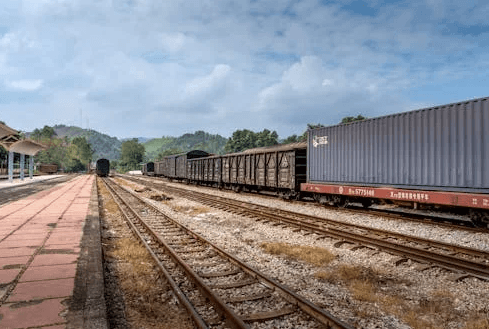
A truck pulls into a port. The driver hands over the container, a crane lifts it, and your shipment moves from road to sea. Somewhere in those ten minutes, the logistics tracking goes dark. Then comes the customs hold. The yard waits. The next leg by rail or road. Each one is a moment when the data either updates or does not. If that sounds familiar, you are not alone. Most logistics teams accept the silence between modes as a fact of life. They check the carrier’s portal, ring the forwarder, and refresh the page. By the time the data catches up, the container is already three time zones away.
Here is the awkward bit. According to recent industry reporting, only 6% of companies report full visibility. The rest are piecing the picture together from emails, spreadsheets, and phone calls. Detective work, basically, dressed up as logistics tracking.
That is a problem on a normal day. On a bad day, that silence is the reason you find out about damaged pharmaceuticals or a missing pallet after delivery. The customer opens the box and rings you in a panic. Survey data suggests 45% of companies only find out about cargo damage post-delivery, when it’s too late to do anything.
The Real Break Points
Logistics tracking does not fail in one big way. It fails in small, specific ways, at specific points. If you have run multimodal freight for any length of time, you already know most of these issues. Worth listing anyway.
The break down points show up in a few familiar places:
- Mode handoffs at ports, rail terminals, and air freight transfer hubs, where each operator runs a different reporting system.
- Deep ocean stretches, where cellular networks fail, and satellite reporting runs slower and sparser.
- Aircraft holds, when aviation rules require devices to sleep, and the condition data goes quiet for hours.
- Subcontractor blackouts, where final-mile carriers run on basic telematics or simply turn tracking applications off.
- Disconnected software, where the sea leg sits in one platform, the road leg in another, and neither talks to the warehouse system.
Why It Matters More Now
A few years ago, you could absorb a few hours of darkness on a route. Margins were thicker. Customers were more forgiving. Insurers asked fewer questions.
That has changed. Cargo theft has climbed sharply across most regions. Customs authorities want better records. Pharma clients demand temperature traceability from factory door to clinic shelf. And your customer, sitting on the receiving end, expects something close to Amazon-style updates on a quarter-million-pound shipment of industrial goods.
There is also the human cost. Operations managers spend hours every week chasing carriers, refreshing portals, and reassuring customers who have lost faith in the ETA they were given. That time is not free. It is just hidden in the salary line.
Survey data showed 47% of businesses said their cargo losses cost $5,000 or more every month. That number adds up fast across a year. Especially if your insurer pushes back when you cannot produce a clean condition log for the disputed window. When the claim adjuster asks for proof of the handoff condition, a screenshot from a carrier’s portal isn’t enough.
How to Close the Gaps
There is no single fix, but the working approach in 2026 looks roughly like this.
Anchor visibility to the shipment, not the mode. Put the tracker on the cargo itself, ideally one device that survives sea, air, rail, and road on a single battery cycle. The container changes vehicles. The freight changes operators. The tracker stays put on every stage of the journey.
Pick hardware that handles regulatory shifts. The same device should sleep when it boards an aircraft, wake during ground handling, and report condition data throughout the journey. Airline approvals are not a marketing line. They are the difference between a tracker that flies and one that gets pulled at the gate.
Push everything into one dashboard. Real-time visibility loses most of its worth if you have to log into four portals to assemble it. A single map of every active shipment, with custom alerts per route or commodity, is what closes the loop.
Plan for sparse zones. Battery life of 60 days or more, satellite fallback, and store-and-forward logging mean the tracker keeps recording even when it cannot transmit. The data flushes the moment connectivity returns.
See also: Key Features to Look for in a Professional Security Services Company
What You Get Back
Quieter weeks, mostly. Fewer calls from clients asking where their container is. Cleaner insurance files when something does go wrong. A defensible record when a counterparty wants to argue about who dropped the pallet or, perhaps more often, who left the reefer door open.
That last point is the quiet desire most freight managers carry around. Not heroics. Not magic. Just the ability to say, with evidence, what happened to the cargo and when. The rest tends to take care of itself.