Imagine going for a walk down to your little pond in early August when it is sweltering outside. It appears green. The fish are huddled at the top of the pond, gasping. There is a layer of scum floating on the edge of the pond. Something seems wrong here. Most pond owners hit this wall sooner or later. The fix usually comes down to one choice. Do you need a pond fountain, or do you need an aerator?
Both move water. Both add oxygen. Yet they solve different problems, and picking the wrong one wastes money and stresses the fish you worked so hard to keep healthy.
What a Pond Fountain Actually Does
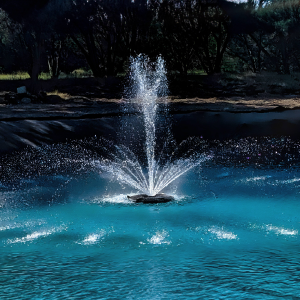
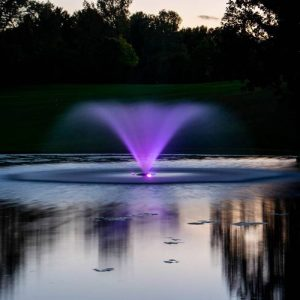
A pond fountain is a floating or submerged pump that shoots water up through a spray nozzle. You see the spray pattern. You hear the splash. It is the piece that gives a pond its visual personality.
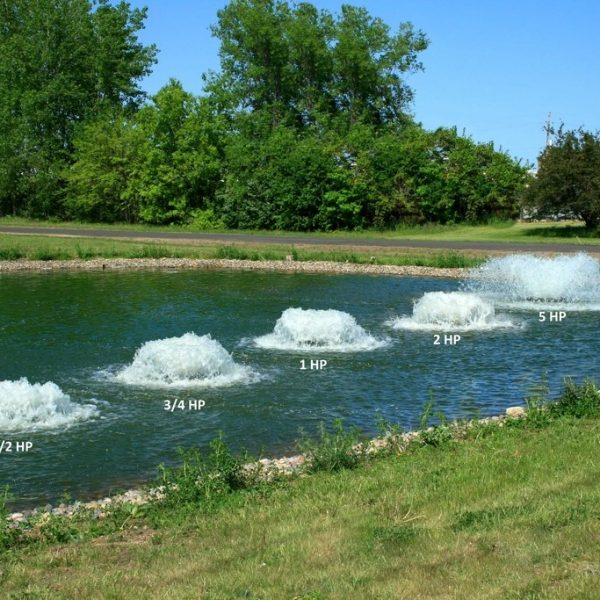
The spray also pulls water from the surface and tosses it back through the air. That contact with air adds some oxygen, mostly in the top foot or two of the pond.
Think of a fountain as a surface worker.
- Shows off with visible spray patterns
- Oxygenates the upper water layer
- Cools the surface on hot afternoons
- Adds sound to mask traffic or neighbors
Fountains shine in shallow decorative ponds, koi ponds up to around six feet deep, and any water feature where looks matter as much as water health.
Here is the catch. If your pond is deeper than about eight feet, a fountain leaves the bottom untouched. Sludge builds. Nasty gases get trapped. Fish at depth still struggle for air, and you might not notice until something dies.
What an Aerator Actually Does
An aerator works the opposite way. Instead of spraying water into the air, it pushes air into the water. Most systems use a small compressor on shore, a weighted air line, and a diffuser that sits on the pond floor.
Bubbles rise from the bottom. They lift cold, oxygen-poor water up as they travel. When that water reaches the surface, it releases bad gases and pulls in fresh oxygen. Then it sinks again.
This is called destratification. It mixes the whole pond instead of just the top.
An aerator quietly does the heavy lifting.
- Oxygenates from the bottom up
- Breaks up thermal layers that suffocate fish
- Reduces muck and bottom sludge over time
- Runs quietly, often out of sight
Aerators work well in deeper ponds, larger acreage ponds, and fish-heavy setups where oxygen demand is high throughout the summer.
The trade-off is in the looks. You see a ring of bubbles on the surface, and nothing more. No dramatic spray. No pretty lights. Just clean water doing its thing.
Depth Changes Everything
Rough guidelines owners actually use.
- Ponds under 4 feet deep: a fountain usually handles circulation and aeration together
- Ponds 4 to 8 feet deep: either can work, though a fountain often struggles in the hottest weeks
- Ponds over 8 feet deep: go with a bottom diffused aerator, always
You can run both in the same pond, and many fish keepers do. The fountain handles the show. The aerator handles survival.
Energy and Running Costs
A fountain pump runs a submerged motor. Larger horsepower units can pull real wattage around the clock. You pay for that on the power bill.
Aerator compressors usually draw less power than a fountain of similar pond capacity, since moving air costs less than moving water. Ballpark numbers from pond equipment makers often show a one-quarter-horsepower aerator pulling a fraction of what a similar-duty fountain pump uses.
Over a full season, the gap adds up. Check the wattage spec before you commit.
See also: Logistics Tracking Across Different Modes: Where the Data Breaks and How to Fix It
Noise, Looks, and Lifestyle
Spend a minute thinking about how you actually use the pond. Do you sit near it in the evening? Host family gatherings around it?
A fountain gives you sound and movement. It feels like a proper water feature. Guests notice.
An aerator is close to silent in the water. The compressor sits in a weatherproof cabinet, sometimes a short distance away. Some models hum softly. Place the cabinet thoughtfully, and you forget it is there.
Neither option is better. It just depends on what you want your backyard to feel like.
How to Pick Without Regret
Ask three questions before buying anything.
- How deep is the pond at its deepest point
- What matters more, appearance or fish survival
- Can you run power safely to the pond, and where
Answer those honestly, and the choice almost makes itself. Shallow and decorative, lean toward a fountain. Deep or fish heavy, lean toward an aerator. Somewhere in the middle, maybe both.
Pick the wrong one, and the pond fights you all summer. Pick the right one, and the water finally does what you always pictured it doing.