There is a particular kind of exhaustion that has nothing to do with sleep. It creeps in after months, sometimes years of living on autopilot. You wake up, move through the motions, and collapse back into bed wondering where the day went. It is not burnout in the clinical sense. It is something quieter: a slow drift away from intention.
What brings people back, more often than not, is not a dramatic overhaul. It is not a new city, a career pivot, or a weekend retreat (though those have their place). It is the rediscovery of small, deliberate rituals, the kind that take fifteen minutes but anchor the entire day.
This is what a lifestyle built on intention actually looks like. Not perfect. Not curated for a camera. But purposeful, in the most ordinary and beautiful sense of the word.
The Morning That Sets the Tone
Ask anyone who has managed to build a life they feel genuinely good about, and they will almost always mention the morning. Not because they all wake at five with military precision, but because they have found some version of a start that feels like theirs.
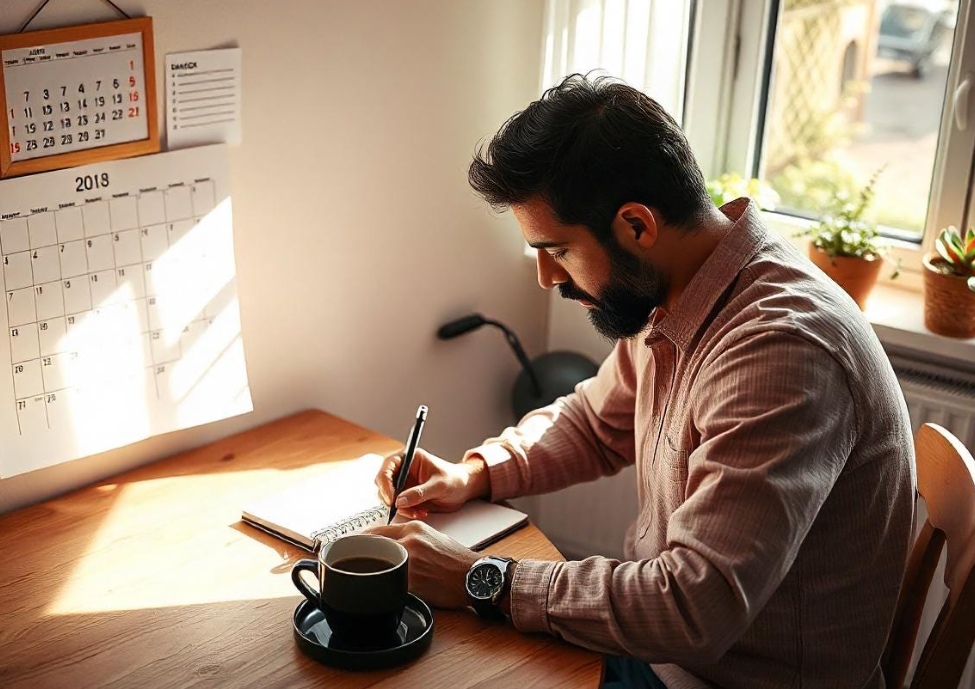
For some, it is silence and coffee before anyone else is awake. For others, it is a walk around the block, earphones in, the day still soft around the edges. The specifics matter less than the principle: mornings are a blank page, and what you write there even in pencil, even briefly, has a way of influencing everything that follows.
The trap most people fall into is treating mornings as purely reactive. The alarm sounds, the phone appears, and within sixty seconds you are already swimming in other people’s urgency. Notifications, headlines, messages all of it real, none of it yours. The ritual interrupted before it even began.
A simple shift: give yourself ten minutes before the screen. Ten minutes to exist without being asked anything. Stretch, breathe, sit with a cup of something warm. It sounds almost embarrassingly small. But compounded across weeks, it changes the texture of your days in ways that are difficult to articulate and impossible to ignore.
See also: Smart Kitchen Renovation Ideas to Refresh Your Home This Year
Movement as Medicine, Not Punishment
Somewhere along the way, exercise became complicated. It became a moral category, something you were either doing correctly or failing at entirely. Gym culture, diet culture, and the relentless optimization mindset turned what should be a joyful physical practice into a source of low-grade guilt.
The shift back toward sustainable movement starts with a single question: what does your body actually enjoy?
For many people, the answer is simpler than they expect. Walking. Swimming. Dancing badly in the kitchen. Lifting something heavy and putting it down again. The kettlebell, for instance, has quietly become one of the most respected tools in functional fitness not because it promises transformation in thirty days, but because it rewards consistency. A few focused swings, presses, and carries several times a week builds genuine, practical strength. The kind that makes carrying groceries easier, that keeps your back from complaining, that reminds your body it is capable and alive.
The point is not the specific tool. The point is finding movement that you will actually return to, week after week, because it makes you feel good rather than because it makes you feel obligated.
That distinction pleasure versus obligation is one of the most underrated factors in any sustainable lifestyle change. We are surprisingly bad at doing things we hate for long stretches of time, no matter how virtuous they are supposed to make us feel.
What You Wear and What It Says to You
Fashion is often dismissed as superficial the province of vanity, not substance. But the relationship between clothing and self-perception is genuinely psychological and worth taking seriously.
There is a well-documented phenomenon sometimes called “enclothed cognition”: the clothes you wear influence how you think and feel about yourself, often without your conscious awareness. The formal jacket that straightens your posture. The worn-in sweater that gives you permission to relax. The outfit assembled with care that makes you feel, before you have done anything else, like someone who has their life reasonably together.
This is not about spending money. It is about intentionality. A wardrobe built around a few pieces you genuinely love, rather than a closet full of things acquired without thought, tends to make mornings easier and days better.
Jewellery occupies a particular niche in this space. Small and often overlooked, accessories carry surprising emotional weight. A pair of earrings chosen for a particular day delicate and understated for a meeting that requires focus, bold and architectural for an evening when you want to take up space can be a form of private communication with yourself. A note that says: I made a choice today. I showed up with intention.
These tiny sartorial decisions are not trivial. They are part of the continuous, low-level work of constructing a self you recognise and like.
The Case for Analog Pleasure
We live in a moment of extraordinary digital saturation, and there is increasing evidence that the ambient hum of connectivity always-on, always-available has a cost. Attention spans shortened. Boredom made it intolerable. The capacity for sustained, deep engagement quietly eroded.
The counterbalance is not necessarily a digital detox. It is the cultivation of analog pleasures: activities that are tactile, slow, and resistant to multitasking.
Cooking from scratch. Reading physical books. Tending to plants that will die if you ignore them. Writing letters. Learning an instrument badly and then slightly less badly. These activities share a quality that screens rarely offer: they demand your whole attention, and in return, they give you back something that feels like presence.
There is a particular satisfaction in making something with your hands that existed nowhere before you made it. Even if it is just a loaf of bread, imperfectly proofed and slightly dense, the experience of its creation is grounding in a way that scrolling simply is not.
Rest as a Practice, Not a Reward
Here is a belief that causes enormous harm: that rest must be earned. That you can only truly relax once the list is finished, the inbox zeroed, the obligations met. But the list is never finished. The inbox refills. The obligations replenish themselves with the reliability of seasons.
Rest that is perpetually deferred becomes rest that never arrives.
Building genuine rest into a lifestyle means treating it as a non-negotiable rather than a luxury. This does not require dramatic gestures. It might mean one evening per week that is genuinely unscheduled. It might mean a walk taken without a podcast, just to let the mind wander where it chooses. It might mean a Saturday morning spent reading in bed without apology.
The nervous system, it turns out, is not designed for perpetual productivity. It is designed for rhythm: effort followed by recovery, engagement followed by withdrawal. When we deny it the recovery phase for long enough, it eventually takes the rest anyway, usually in the form of illness, irritability, or a flatness that no amount of productivity can shift.
Choosing to rest before you are forced to is not laziness. It is maintenance.
Putting It Together (Without Forcing It)
The lifestyle that genuinely sustains you will not look like anyone else’s. It will be assembled from specifics: the movement you enjoy, the morning ritual that fits your temperament, the way you dress, the analog pleasures that absorb you, the quality of rest you protect.
What it will have in common with every other intentional life is the element of choice. Not a perfect choice, made once and forever. But continuous, low-stakes, renewable choosing: today I will move my body. Today I will wear something I love. Today I will eat dinner without a screen. Today I will go to bed before I am desperate for sleep.
None of it is dramatic. All of it matters.
The life you want is not waiting at the end of some significant change. It is available in increments, starting now, in the next decision you make that is slightly more intentional than the one before it.
That is enough. That, in fact, is everything.