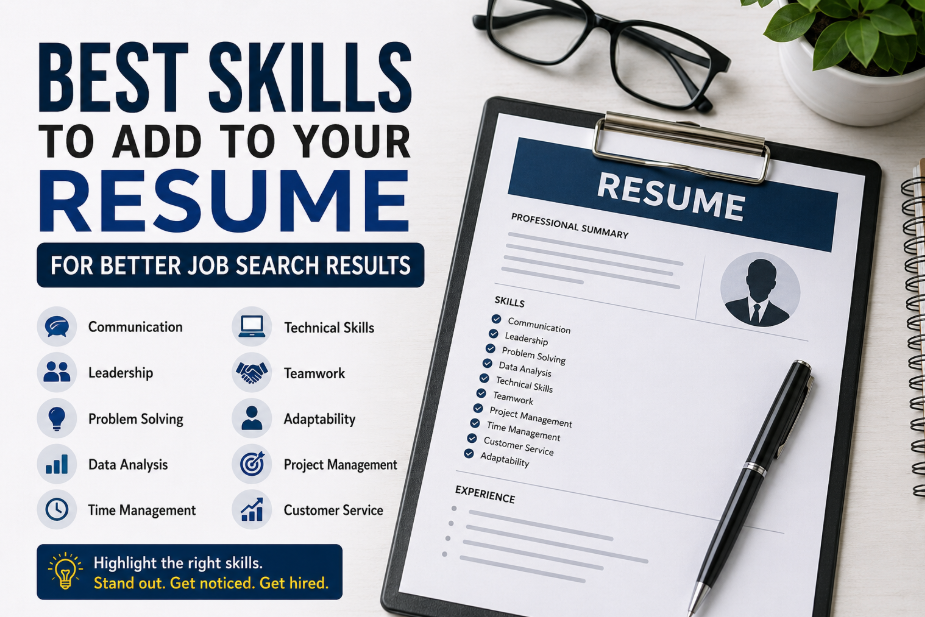
A strong resume does more than list your work history. It shows employers that you have the right skills, experience, and mindset to succeed in the role. In today’s competitive job market, recruiters often review hundreds of applications for one position, and many companies use applicant tracking systems to scan resumes before a human recruiter sees them. That means the skills section of your resume must be clear, relevant, and carefully matched to the job you want.
Choosing the best skills to add to your resume can improve your chances of getting noticed, especially when those skills reflect the exact needs of the employer. Whether you are applying for your first job, changing careers, or trying to move into a higher-level position, your skills can help you stand out from other candidates.
Using professional Resume Templates from MyCVCreator can also make the process easier. A well-structured template helps you organize your skills, experience, education, and achievements in a clean format that recruiters can read quickly.
Why Resume Skills Matter
Employers want to know what you can do, how well you can do it, and how your abilities can help their organization. Your skills section gives them a quick summary of your strengths.
The right skills can help your resume:
Show that you match the job description.
Pass applicant tracking systems.
Highlight your most valuable abilities.
Support your work experience with clear evidence.
Make your resume easier for recruiters to scan.
Many job seekers make the mistake of adding generic skills such as “hardworking,” “team player,” or “good communication” without context. While these qualities may be important, they are more powerful when supported by examples, measurable results, or role-specific language.
For example, instead of simply writing “communication skills,” you could write:
“Presented weekly project updates to senior managers and improved team alignment across departments.”
This sounds more professional because it shows how the skill was used in a real work situation.
See also: Floor Sanding in Brisbane: Restoring Timber Floors the Right Way
Hard Skills vs Soft Skills
Before choosing skills for your resume, it is important to understand the difference between hard skills and soft skills.
Hard skills are technical or job-specific abilities. These are often learned through training, education, certification, or hands-on experience. Examples include data analysis, graphic design, bookkeeping, programming, project management software, search engine optimization, and foreign languages.
Soft skills are personal qualities that affect how you work with others and solve problems. Examples include leadership, communication, adaptability, teamwork, time management, creativity, and emotional intelligence.
A strong resume usually includes both. Hard skills show that you can perform the technical requirements of the job, while soft skills show that you can work well in a professional environment.
Best Skills to Add to Your Resume
1. Communication Skills
Communication is one of the most valuable skills in almost every industry. Employers want candidates who can explain ideas clearly, listen carefully, write professionally, and communicate with customers, teammates, or managers.
Good communication skills may include:
Business writing.
Public speaking.
Email communication.
Client communication.
Presentation skills.
Active listening.
Conflict resolution.
Cross-team collaboration.
Instead of simply listing “communication,” show how you used it. For example:
“Prepared client reports and presented campaign performance updates during monthly review meetings.”
This gives employers a clearer picture of your ability.
2. Leadership Skills
Leadership is not only for managers. You can show leadership by guiding a project, helping new employees, solving problems, taking initiative, or making decisions that improve results.
Leadership skills may include:
Team supervision.
Decision-making.
Mentoring.
Delegation.
Strategic planning.
Performance improvement.
Conflict management.
Project ownership.
A strong resume bullet could say:
“Led a team of five customer service representatives and improved response time by 30% through better task distribution.”
This shows leadership and measurable impact.
3. Problem-Solving Skills
Employers value people who can identify problems, think critically, and create solutions. Problem-solving skills are especially useful in roles involving operations, customer service, technology, sales, administration, healthcare, and management.
Problem-solving skills may include:
Critical thinking.
Troubleshooting.
Research.
Process improvement.
Decision-making.
Root cause analysis.
Creative thinking.
Risk assessment.
Example:
“Identified delays in the order fulfillment process and introduced a tracking system that reduced customer complaints.”
This shows that you did not just notice a problem; you helped fix it.
4. Technical Skills
Technical skills are especially important in modern workplaces. Even non-technical roles often require digital tools, software platforms, or industry-specific systems.
Examples of technical skills include:
Microsoft Excel.
Google Workspace.
CRM software.
Data entry.
HTML, CSS, JavaScript, or PHP.
WordPress.
Accounting software.
Canva or Adobe Creative Suite.
Project management tools.
Email marketing platforms.
Social media management tools.
For better results, match your technical skills to the job description. If a job posting mentions Excel, Salesforce, WordPress, or Google Analytics, and you have experience with those tools, include them clearly on your resume.
5. Digital Literacy
Digital literacy means being comfortable using technology to complete tasks, communicate, research, and solve problems. This skill is now important in almost every career field.
Digital literacy may include:
Online research.
Cloud-based collaboration.
File management.
Virtual meeting tools.
Basic cybersecurity awareness.
Digital communication.
Use of productivity software.
Remote work tools.
Example:
“Managed remote team communication using Slack, Google Drive, and Zoom to keep project tasks organized and on schedule.”
This shows practical digital confidence.
6. Data Analysis Skills
Data is becoming important in many industries. You do not need to be a data scientist to show data skills on your resume. If you can collect, organize, interpret, or report information, that can be valuable.
Data analysis skills may include:
Microsoft Excel.
Google Sheets.
Data visualization.
Report writing.
Dashboard creation.
Research analysis.
Sales reporting.
Performance tracking.
Basic statistics.
Example:
“Analyzed monthly sales data using Excel and created reports that helped management identify top-performing products.”
This makes the skill specific and useful.
7. Customer Service Skills
Customer service skills are valuable in retail, hospitality, healthcare, sales, support, administration, and many other industries. Employers want people who can handle customers professionally and create positive experiences.
Customer service skills may include:
Patience.
Empathy.
Complaint resolution.
Product knowledge.
Relationship building.
Telephone etiquette.
Live chat support.
Customer retention.
Example:
“Resolved customer complaints through phone and email support, maintaining a high satisfaction rating.”
This shows professionalism and results.
8. Project Management Skills
Project management skills show that you can organize tasks, meet deadlines, coordinate people, and deliver results. These skills are useful in many roles, even if your job title is not “project manager.”
Project management skills may include:
Planning.
Scheduling.
Budget tracking.
Task coordination.
Risk management.
Reporting.
Team collaboration.
Agile or Scrum methods.
Trello, Asana, ClickUp, Monday.com, or Jira.
Example:
“Coordinated a website redesign project across content, design, and development teams, completing the launch before deadline.”
This shows organization and teamwork.
9. Time Management Skills
Time management helps employers see that you can prioritize tasks, meet deadlines, and stay productive without constant supervision.
Time management skills may include:
Prioritization.
Scheduling.
Deadline management.
Task planning.
Multitasking.
Productivity tracking.
Goal setting.
Example:
“Managed daily administrative tasks, customer inquiries, and reporting duties while consistently meeting deadlines.”
This is stronger than simply writing “time management.”
10. Teamwork and Collaboration
Most jobs require you to work with others. Teamwork shows that you can cooperate, share ideas, support colleagues, and contribute to group goals.
Teamwork skills may include:
Collaboration.
Flexibility.
Respectful communication.
Shared problem-solving.
Cross-functional work.
Feedback acceptance.
Team support.
Example:
“Collaborated with sales and marketing teams to improve lead follow-up and increase monthly conversions.”
This connects teamwork to business results.
How to Choose the Right Skills for Your Resume
The best skills to add are not always the most impressive ones. They are the skills most relevant to the job you are applying for.
Here is a simple process:
Read the job description carefully.
Highlight repeated skills, tools, and responsibilities.
Compare them with your real experience.
Add the most relevant skills to your resume.
Use those same skills naturally in your work experience section.
For example, if a job description mentions “customer support,” “CRM software,” “problem-solving,” and “email communication,” your resume should reflect those terms if they match your experience.
This helps your resume feel tailored instead of generic.
Where to Place Skills on Your Resume
You can place skills in different parts of your resume, depending on your experience level and the type of job.
Skills Section
This is where you list your most important skills in a simple format. You can group them into categories, such as:
Technical Skills: Excel, WordPress, Google Analytics, CRM software.
Soft Skills: Communication, leadership, problem-solving, teamwork.
Industry Skills: Customer service, sales reporting, inventory control, content writing.
Professional Summary
Your resume summary should mention your strongest skills and career value.
Example:
“Detail-oriented administrative assistant with strong skills in calendar management, client communication, data entry, and office organization.”
Work Experience Section
This is the best place to prove your skills with examples.
Example:
“Improved customer response time by organizing support tickets and creating email templates for common inquiries.”
This shows customer service, organization, communication, and problem-solving in one bullet point.
How Resume Templates Help You Present Skills Better
Using professional Resume Templates can help you organize your skills in a way that looks clean, modern, and easy to read. A good template gives your resume structure, which makes it easier for recruiters to find the most important information quickly.
MyCVCreator offers resume-building tools and templates that can help job seekers create polished resumes without starting from scratch. Instead of worrying about layout, spacing, and formatting, you can focus on writing strong content that highlights your qualifications.
A strong resume template can help you:
Present your skills clearly.
Keep your resume professional.
Avoid messy formatting.
Create a better first impression.
Save time during the application process.
Make your resume easier to scan.
When your skills are well-organized, recruiters can quickly understand what you bring to the role.
Common Mistakes to Avoid When Adding Skills
Adding Too Many Skills
A long list of random skills can make your resume look unfocused. Choose quality over quantity. It is better to include 10 highly relevant skills than 30 unrelated ones.
Using Skills You Cannot Prove
Do not add skills just because they appear in the job description. If an employer asks about them in an interview, you should be able to explain your experience confidently.
Listing Generic Skills Only
Skills like “hardworking” or “motivated” are not bad, but they are too general on their own. Use stronger, more specific skills that match the job.
Forgetting Keywords
Many companies use applicant tracking systems to scan resumes. If your resume does not include important keywords from the job description, it may not rank well. Use relevant keywords naturally.
Ignoring Results
Skills become more powerful when connected to results. Whenever possible, show what your skill helped achieve.
Instead of:
“Good at sales.”
Write:
“Increased monthly sales by building stronger client relationships and following up with warm leads.”
Best Resume Skills by Career Level
Entry-Level Candidates
If you are just starting your career, focus on transferable skills, education, internships, volunteer work, school projects, and digital skills.
Good skills to include:
Communication.
Teamwork.
Time management.
Microsoft Office.
Research.
Customer service.
Problem-solving.
Adaptability.
Writing.
Basic data entry.
Mid-Level Professionals
If you already have work experience, focus on role-specific skills, achievements, and leadership potential.
Good skills to include:
Project management.
Team collaboration.
Reporting.
CRM tools.
Process improvement.
Customer relationship management.
Data analysis.
Training.
Sales.
Marketing.
Senior Professionals
If you are applying for leadership or senior-level roles, focus on strategy, decision-making, leadership, and measurable business impact.
Good skills to include:
Strategic planning.
Team leadership.
Budget management.
Stakeholder communication.
Performance management.
Business development.
Change management.
Operations improvement.
Executive reporting.
Mentoring.
How to Make Your Skills Stand Out
The best way to make your skills stand out is to connect them with real examples.
Use this formula:
Skill + action + result
Example:
“Used Excel to track weekly sales performance and identify trends that improved product ordering decisions.”
This is stronger than simply writing “Excel” because it explains how the skill was used.
Another formula is:
Action verb + task + tool + outcome
Example:
“Created email marketing campaigns using Mailchimp, increasing newsletter engagement and customer follow-up.”
This makes your resume more impressive and easier to understand.
Final Thoughts
The best skills to add to your resume are the ones that match the job, reflect your real experience, and show employers how you can contribute. A strong skills section can improve your job search results by making your resume more relevant, searchable, and convincing.
Focus on a balanced mix of hard skills and soft skills. Use the job description as your guide, include keywords naturally, and support your skills with examples in your work experience section.
With the right content and a professional layout, your resume can make a stronger impression. MyCVCreator helps job seekers create polished resumes using professional Resume Templates, making it easier to present skills, experience, and achievements in a format recruiters can quickly understand.