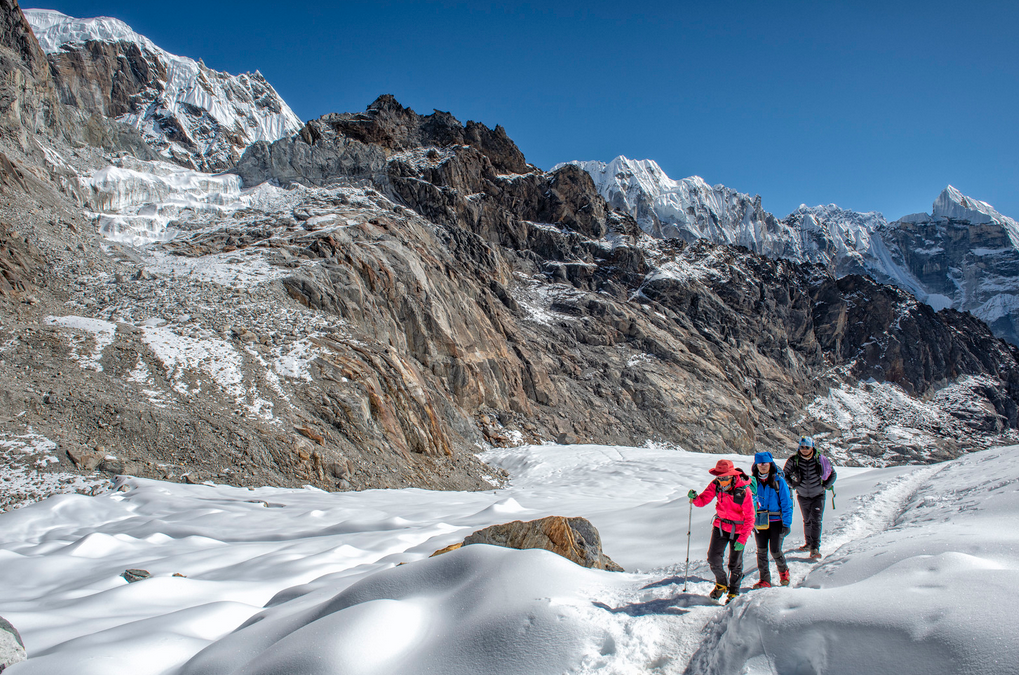
When you think of a trekking trek, you may think about rocky trails that are eventually going to lead you to an end destination. However, treks in the Everest region are not only about reaching the end destination but also about taking in as much available for your discovery and exploration in nature. Nature is quite possibly one of the most endearing aspects of the Everest three-pass trek as well. During the trek, you are going to, needless to mention, come through the most beautiful and majestic mountain views, amazing landscapes serving as a panoramic view, and cultural insight of the locals. However, flora and fauna are two of the other parts of nature that you will be enjoying the sights of.
Wildlife in the Everest region can be both rare and not rare given the wildlife creatures that you find here may or may not be found in any other parts of the world, including Nepal. There is a lot to discover when it comes to wildlife when you are on the Everest three-pass trek. Make sure to read till the end of this article to know more!
Where are you most likely to find wildlife species when on the Everest three-pass trek?
As a trekker, you are going to trek to more than just some specified locations. Spontaneously making plans for a trek can be just as productive for those who want to get the most out of a single trek. As for where you can find wildlife species on the Everest three-pass trek, it is most likely going to be either Sagarmatha National Park or your trekking trails.
The Sagarmatha National Park is one of the most popular national reserves that has been playing a major role in wildlife conservation. Similarly, you cannot miss out on the many birds and animals you may come across when you least expect them to while you are ascending toward your destination.
Endangered species you may discover during the Everest Three Passes trek
There are some endangered species that you may discover during the Everest three-pass trek. This trek is going to make you realize that one of the most isolated parts of Nepal still has managed to preserve some species that had long been shortened in number. These species are quite a sight for everyone lucky enough to witness them.
The following are some of the endangered species that you will get a chance to discover during the Everest three passes trek:
Snow leopard
Snow leopard is one of the endangered species that have been endangered to this day. Though on the verge of extinction, this species of leopard has been protected and preserved with much thoughtfulness in mind by the authorities of Everest Conservation Group. These leopards may or may not be seen during your trek, though there are many of them living in and around the mountains.
Sagarmatha National Park is a great location for you to find one of these leopards. Moreover, besides the Himalayas, it might be impossible to find them in any other places since there has been an increase in the environmental temperature due to global warming. The Sagarmatha conservation authorities have also made sure to remind the visitors that the area restricts poachers and will take strict actions when caught poaching.
Red panda
A rare animal that is not found in many other places in the world besides the Himalayas is the red panda. This animal species looks adorable and you may never have seen it as a rare rare-looking panda in your life. There is a good population of red pandas in the Everest region, mostly because the authorities have made sure to take good care of the animal species. It is again, completely banned for visitors to attempt to hunt or disturb the state of the red panda’s being. You may, however, take a good look at the animal without an issue.
Keeping a distance and being as respectful as possible about their existence is a reason why visitors have, to this day, not harmed the population and have indirectly helped in the conservation of the animal species while also being able to explore their existence at the same time.
Himalayan Tahr
One of the rarest species that you will see during your Everest three-pass trek is the Himalayan Tahr. This animal is going to be one that will shock you with its ability to keep balance even at the oddest and rockiest locations. These goat-like species can easily stand and walk through steep rocky walls without an issue. Also, most of the Himalayan Tahr are likely to walk in a group as well.
Poaching and hunting activities have lessened with the increases in conservational tactics of this species as well. There are not many places besides the Everest region that will give you a chance to find these endangered Tahrs. Likewise, there has been comparatively better stability in the Tahr population as of the current time.
Musk deer
Musk deers are by far one of the rarest and most beautiful species of deers that have been endangered due to excessive hunting and poaching activities. These deers leave a special scent that is used in perfumes and exceptional fragrances found at a good cost in the market. Most of the hunting activities are done for the same reason as well. Since the Everest region is very strict with how they have their visitors conduct themselves when they are on a visit, there has been an improvement in the population of Musk deer in the Everest region.
Similarly, you may not quite find this deer species in any other part of the world unless they are just as protected or preserved as in the Everest region. And, you will for sure, be able to catch a side of one during your Everest three-pass trek.
Bird species
Besides animals, there are around 118 species of birds living in the Everest region. Though one can’t find all the species at the same time during the trek, you can most likely find many of these birds throughout your trek. Not all of the birds that are found here are going to be endangered, but you might get a good sense of surprise when you come across some beautiful and rare birds as well. Overall, the colorful birds with their varying sounds will surely prove to you that nature, when it comes to the fauna of the Everest region, is what sets your Everest three-pass trek apart from any other trekking journey.
Things to remember during wildlife encounters in the Everest Three Passes trek
There are several things that you need to remember when you are on your way to explore the wildlife species in the Everest three-pass trek. A trekker can easily find many wildlife species during his trek, but it is just as important for him to act responsibly and as per the rules set by the conservationists in the Everest region while also enjoying the journey to the fullest.
The following are the things to remember during wildlife encounters in the Everest three passes trek:
Diverse ecosystems
The ecosystem of the Everest region is very diverse. This means that you will have a lot to explore besides just the species of both flora and wildlife that are going endangered. Unlike many other places in the world where you can still be able to find amazing species of wildlife, you are going to find almost the same and more in the Everest three-pass trek. This trek is going to be marked as one where you get the chance to unleash not only the adventurer in you but also the explorer. You will most definitely be stunned by the colors you will find throughout your journey.
Wildlife watching
The visitors are restricted from doing a lot of activities that may harm the stability of the wildlife in the Everest region. You can, whatsoever, watch wildlife from afar. You don’t even have to make an effort as many times than not, the species will come to your sight and you won’t necessarily have to go anywhere to discover them in the Himalayas. Not only can wildlife watching be entertaining and a unique experience, but it is also going to be very educative.
Responsible trekking
Trekkers must be wise to be as responsible as possible when they are trekking. Having responsibility as such is going to keep you invested in being a good trekker. You would very much appreciate you being a mindful person as you do everything with great importance towards the environment.
Conclusion
Wildlife encounters are not quite something that a lot of trekkers have in mind. But for anyone who wants to get as much knowledge about nature, especially in a rare part of the world, then they surely have to get a fair bit of education on the same. From discovering the rarest species to finding peace in stretching your hands towards the conservation and preservation of nature, you can do it all during the Everest three-pass trek as you go through the most remote regions.